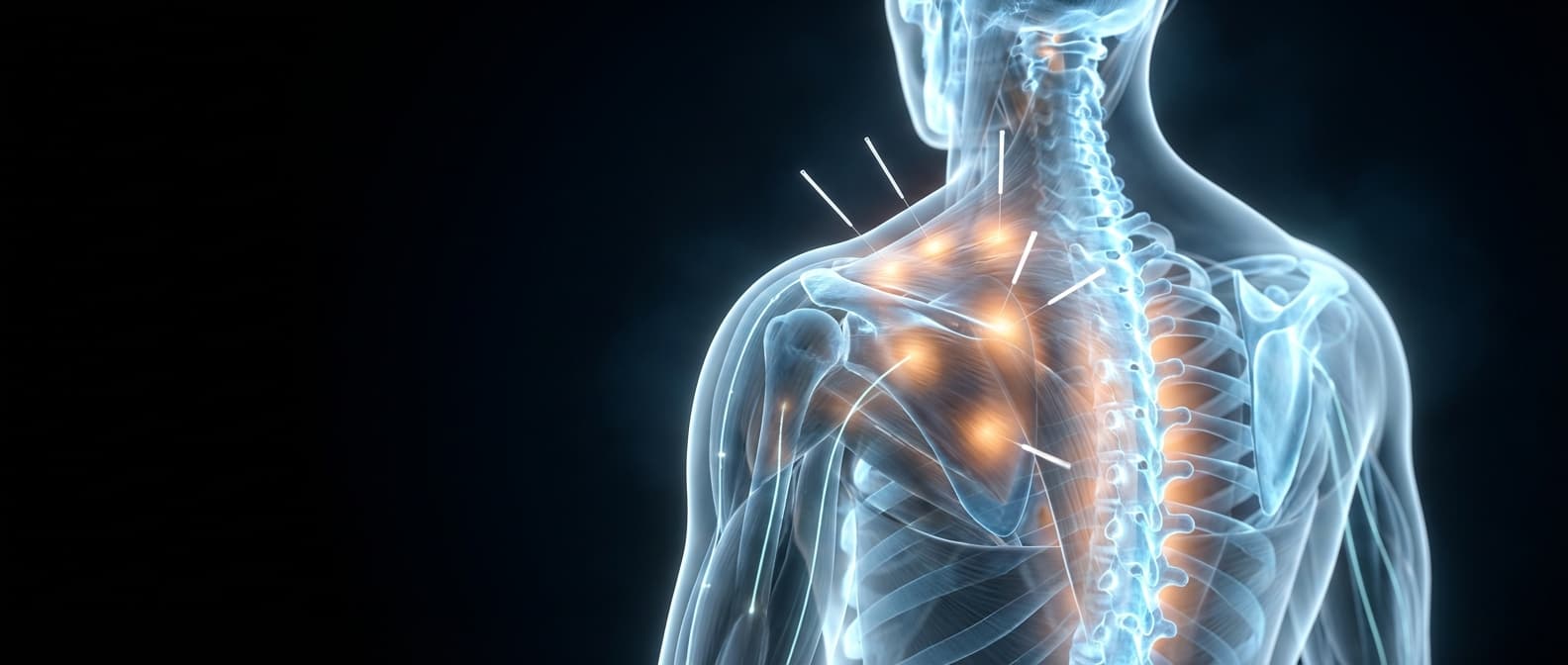
Many patients ask: "What is the difference between dry needling and acupuncture?" While both use fine needles, they are based on entirely different principles, target different things, and are applied by different professionals. Spiros Efstathiou at Refyzio uses therapeutic dry needling — an evidence-based technique grounded in anatomy and neurophysiology.
What is dry needling?
Dry needling is a modern therapeutic technique that uses fine, sterile, single-use needles to treat myofascial trigger points. The needles are inserted directly into the trigger point within the muscle, eliciting a local twitch response that leads to muscle relaxation, pain reduction, and improved blood flow. The method is based exclusively on anatomy, neurophysiology, and current scientific evidence.
What is traditional acupuncture?
Traditional acupuncture originates from Chinese medicine and uses needles at specific body points (meridians) to balance energy flow (qi). Its theoretical foundation is traditional Chinese philosophy. While some patients report relief, the scientific evidence for many applications remains debated.
Key differences
Theoretical basis: Dry needling is based on neurophysiology and anatomy. Traditional acupuncture is based on Chinese medicine. Target: Dry needling targets myofascial trigger points. Acupuncture targets meridians. Application: Dry needling is performed by certified physiotherapists as part of an integrated treatment protocol. Evidence: Dry needling for musculoskeletal conditions has strong scientific support.
What conditions does dry needling treat?
Dry needling is particularly effective for: chronic back and neck pain, tension headaches and migraines, shoulder pain and impingement syndrome, tennis elbow, plantar fasciitis, muscle spasms, and tendinopathies. At Refyzio, therapeutic dry needling is always combined with manual therapy and therapeutic exercise for optimal results.
Need physiotherapy? Get in touch to book an appointment. We accept GeSY and private appointments.
Contact usDoes dry needling hurt?
The needle is extremely fine. You may feel a brief muscle twitch (twitch response), which means the treatment is working. Most patients report minimal discomfort.
How long is a dry needling session?
Dry needling is part of a comprehensive physiotherapy session. The needling itself takes 15–20 minutes, while the full session also includes manual therapy or therapeutic exercise.
Who can perform dry needling?
In Cyprus, dry needling is performed by certified physiotherapists with specialised training. Spiros Efstathiou at Refyzio is certified in therapeutic acupuncture.